
FAQ
1. What is the size of a standard roll of wallpaper?
A standard wallpaper size is 53 cm x 10.05 cm, generally covering 5 m², depending on the pattern, unless otherwise indicated.
2- What does the “RAL Quality Seal” mean?
RAL is one of the best methods for determining the quality of a product. Having RAL certification means having the EXCELLENCE, quality, and durability required for a product within its category, respecting the environment, industry, public health, and established engineering standards.
The RAL quality seal was created in 1925 by a German national council and is now recognized worldwide.
3- Are our wallpapers non-woven?
Yes.
4- What does Non Woven mean?
Non-woven wallpaper is an innovative blend of synthetic and natural fibers that are also used to make gauze, coffee filters, and tea bags.
5- What are the advantages of Non-Woven wallpapers?
• Greater resistance: they are more durable;
• Better tear resistance: they are known for their robustness and have a thicker feel;
• Easier to install: the glue is used directly on the wall and the paper is applied dry, requiring no soaking;
• Easier to remove: when you need to remove our wallpapers, simply find the end and/or the beginning and peel it off; it comes off in one piece;
• Cleanable: they are lightly washable with a sponge and neutral soap;
• Mold-free: Non-woven wallpapers are breathable, making it difficult for mold to grow due to various moisture sources;
• Compared to vinyl: significantly smaller carbon footprint, carbon emissions are lower than those of disposable diapers.
6- What is the difference between pasting wallpaper and conventional wallpaper?
When pasting wallpaper, you simply apply the glue directly to the wall instead of to the paper. This type of wallpaper is made of a specially designed material, much stronger than traditional wallpaper, and does not require soaking time due to the special properties of the mesh.
7- What is the effect of heat when installing wallpaper?
Wallpaper needs to dry naturally in a well-ventilated environment. In high-temperature areas, the drying process can accelerate, causing the wallpaper to shrink and leaving the dreaded gaps between the strips.
8- Did I apply too much glue?
It’s important to apply the correct amount of glue to the wallpaper. Too little glue can cause the wallpaper to peel, especially at the edges. Too much glue can cause shrinkage, air bubbles, and stains.
9. Can I install wallpaper over existing wallpaper?
No. It’s best to remove any existing wallpaper before redecorating.
10- Why is it important to prepare the walls?
For best results, make sure your walls are in good condition for wallpaper installation. They should be dry, smooth, clean, and free of any glue residue. For light-colored wallpapers, ensure the walls are prepared to reflect a white and uniform surface.
11 – If I order multiple rolls, will they be from the same batch?
Yes. All orders of multiple rolls will be shipped from the same batch; we always recommend checking each roll and the batch number on the label before installation.
12- Wallpaper symbolism:
Wallpaper symbolism:
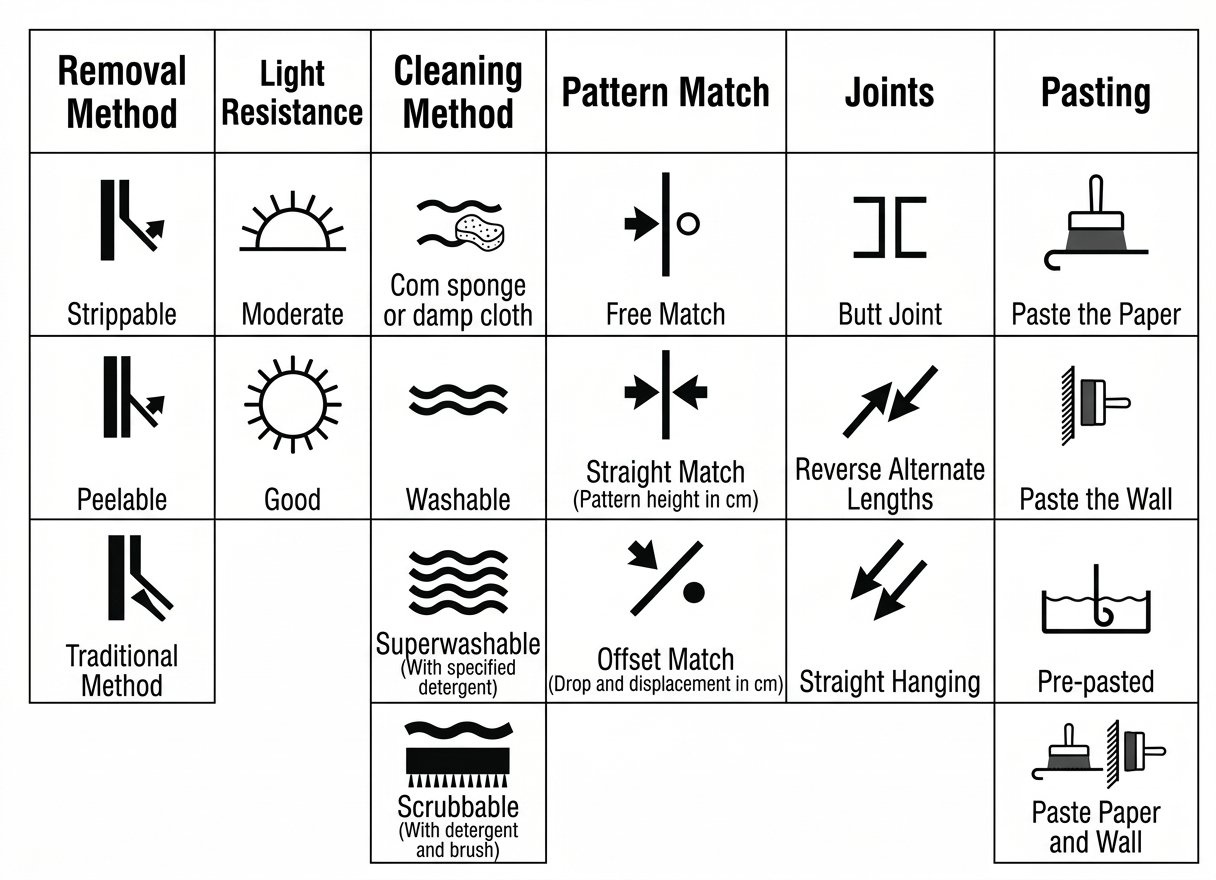
13- Our papers are:
• Detachable;
• Good resistance to sunlight;
• Cleanable with the indicated detergent;
• Free joint nature + joint height value in centimeters + joint height and offset in centimeters;
• Adhesive applicable to the surface (wall).
14- What is the best product for cleaning wallpaper?
You can make a mild cleaning solution by adding a little detergent to warm water. Use a small amount of this solution at a time to scrub the wall. Use a lint-free cloth and gently wipe the affected area. Rubbing too hard may remove the print or fade the color.
If the water and detergent solution isn’t working, cleaning the wallpaper with vinegar and water is another popular choice. Try using half a cup of vinegar for every cup of water. Spray the mixture onto the stain and, using a microfiber cloth, preferably colorless, wipe from the bottom up to avoid dripping the mixture onto the wall.